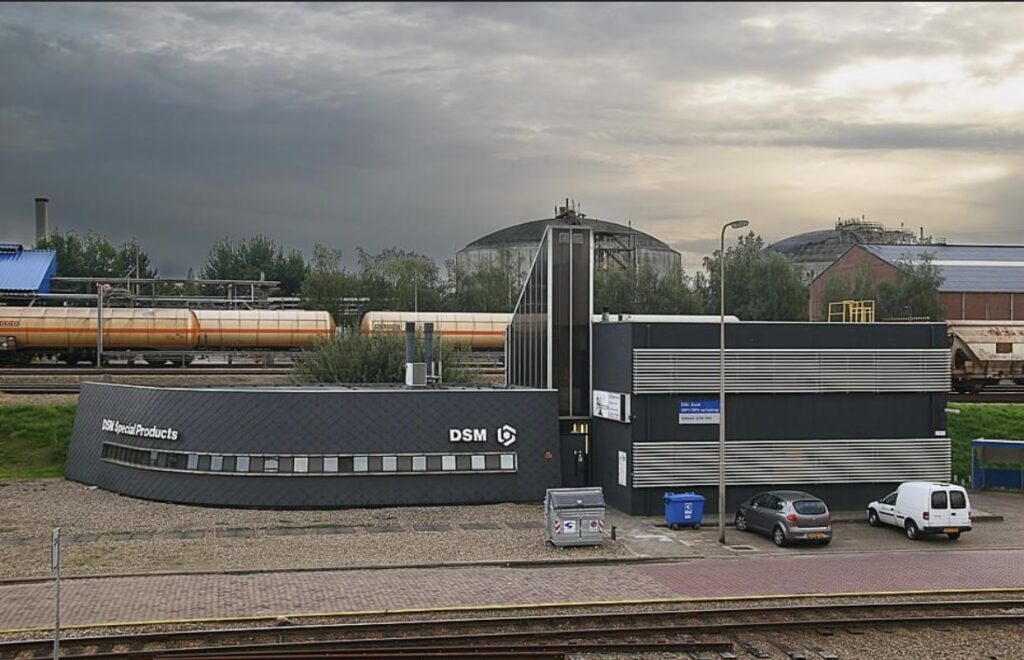
In 2000, I moved to DSM Rotterdam in the Botlek. But Rotterdam was not where I first became involved in centralizing control rooms.
That had started a few years earlier in Geleen.
The Geleen site was quite different from Rotterdam. It consisted of a collection of relatively small plants, many of which were still operated locally from conventional control panels. I had developed the idea of bringing these operations together into a single control room.
For quite some time, nothing happened with the idea.
Then a consultancy came in looking for opportunities to reduce costs.
Suddenly, my old proposal became interesting.
I was asked to work out how it could be implemented. The idea combined automation — using a mini-DCS — with consolidation of the local control rooms into one central control room.
A project manager was appointed, and I became part of his project team.
Designing a control room is not only an engineering exercise
One of the interesting decisions the project manager made was not to leave the design of the new control room entirely to engineering.
Instead, he brought in an architect.
From earlier experience, I knew that another discipline could contribute something important as well: ergonomics. A control room is, after all, a workplace in which people have to monitor processes, recognise abnormal situations and make decisions, often under pressure.
So an ergonomist was brought into the project too.
The architect and the ergonomist approached the design from quite different perspectives. There was some tension between them — which was perhaps inevitable.
But both contributed something valuable.
The architect helped create a control room that was an imposing and coherent space. The ergonomist brought the perspective of the people who would actually have to work there.
In the end, the two perspectives came together in a design that was both visually impressive and suited to the needs of its users.
That experience stayed with me.
Rotterdam: Lifetime Extension and Redesign Process Control
The Rotterdam project was considerably larger. The complete old plant was being revamped, including the control system, and the project team included people from several contractors.
One of the things I learned from the project manager was that a project team does not automatically become a team simply because everybody has been assigned to the same project.
He deliberately worked on that. He organised regular activities in which people met outside the immediate project work: barbecues at the beach at Rockanje, and team-building events, including one in the Ardennes and another at Papendal, the national sports centre.
These things might sound peripheral compared with the technical complexity of the project. I did not experience them that way. They helped turn people from different companies into one project team.
I learned a lot from that project manager, including something that stayed with me much later:
cooperation has to be created; it does not automatically follow from an organisation chart.
By the end of the project, much of the contractor organisation had disappeared again, and I became the project manager for the remaining control-room work. By then I had seen the project from both sides: as somebody being guided by an experienced project manager and, eventually, as the person responsible for bringing the remaining work together.
The new control room
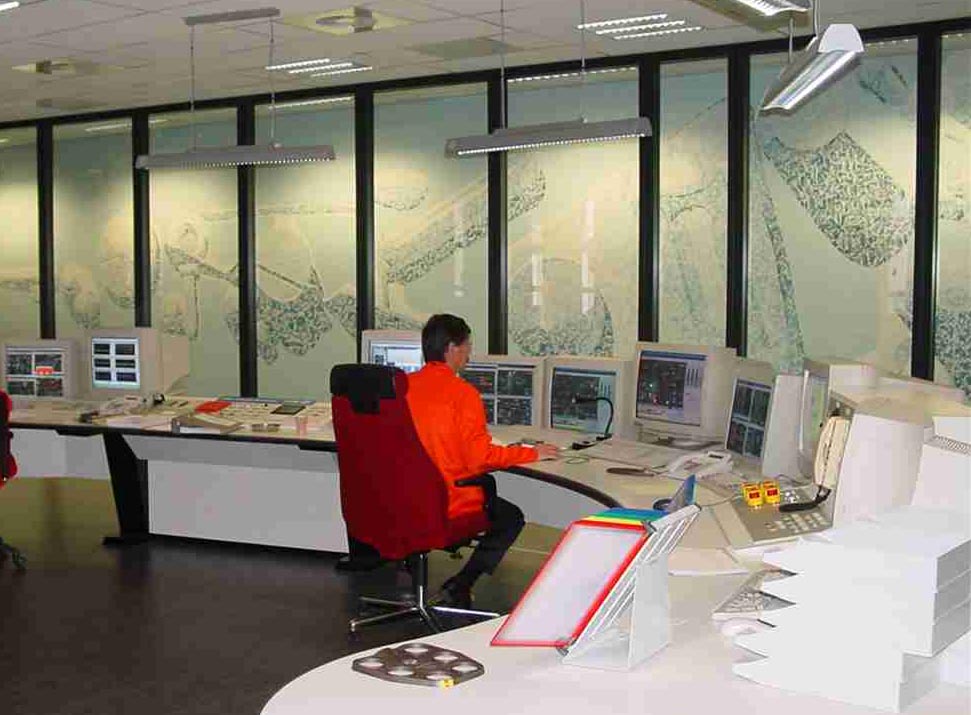
I had become the project manager for the consolidation of two existing control rooms. This was the final step that only was possible because of the previous steps in the overall project.
And I could bring the lessons from Geleen with me.
The Rotterdam project was considerably more than putting two control rooms together. One of the existing control rooms was already large, with extensive conventional instrumentation arranged in large panels. The other had its own control environment.
In the new control room, all of that conventional instrumentation disappeared.
The plant would now be operated entirely through screens. There had been screen-based operation before, but this was a fundamental change: the operators would no longer have the physical overview provided by the traditional panels.
At the same time, we had to redefine the operators’ roles and assess people for the new roles.
So we were changing three things simultaneously:
- the physical organisation of control;
- the technology through which operators interacted with the plant;
- the roles and organisation of the people operating it.
This was where the work-process model, automation and empowerment came together.
What happened after implementation
Once the new control room was operational, something happened that I found particularly interesting.
The operators started asking for things.
They would notice that a particular piece of information was useful to them but wasn’t yet available in the form they wanted. They would ask for a display, an analysis or another tool that would help them understand what was happening in the plant.
We had a historian system containing large amounts of process data, and we had provided tools with which displays could be built.
The operators started using them.
Rather than waiting for engineering or IT to develop everything for them, they began creating displays themselves, using the data that were already available.
This was particularly interesting because we had just taken away something they had previously had: the immediate visual overview provided by the conventional control panels.
Instead of simply accepting the new screen-based environment, they started shaping it to suit the way they needed to operate.
And then it went further
What surprised me was that the operators didn’t stop at process displays.
They began thinking about the information they needed as a whole. One of the operators even made a picture of the information environment around the control-room operator.
The operator is shown in the centre, connected to the different sources and tools needed to operate and troubleshoot the plant: the DCS, trends, laboratory analyses, a process-conditions tool, shift reports, maintenance, plant technology staff, other plant operators and a resource called Mockingbird, containing data and instructions..
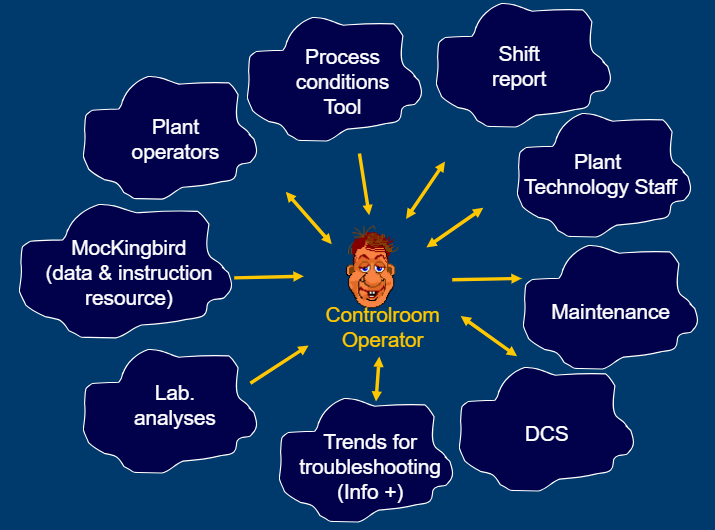
The picture is interesting because it wasn’t an IT architecture diagram produced by an IT department. It was an operator’s view of the information environment needed to do the job.
And the operator didn’t just draw the picture. Using the simple tools we had made available, operators started building parts of this environment themselves.
One example was Mockingbird, a resource where documents could be stored and links could be created between related documents. Other tools brought together process data, trends and other information needed for troubleshooting.
By today’s standards, none of this was particularly sophisticated technology. But that wasn’t the point.
The people doing the work had identified what information they needed and started shaping the tools around their work.
Nobody had instructed them to develop an information system.
They simply saw an opportunity and took it.
The control-room operator at the centre
Looking back, I think the picture captures something important about the change we were trying to make.
The new control room had made the operator responsible for a much broader operating environment. The old control panels had provided a very tangible overview of the process. Now the operator had to construct that overview from information presented through screens and other systems.
But instead of simply asking someone else to design the perfect interface, the operators started building the information environment they needed.
This was empowerment in a very practical form.
We had provided the framework, the process data and some relatively simple tools. The operators provided the detailed knowledge of what was useful in their work.
The result was something neither side could have designed as well on its own.
This was empowerment in practice
Looking back, I think the important part was the combination of things we had done.
We had given people new roles and responsibilities, but we had also given them information and tools with which they could fulfil those responsibilities.
And then we allowed them to shape the tools themselves.
The work-process model provided the organisational framework. The new control room provided the environment. The historian provided access to information about what was actually happening. And the development tools gave operators the ability to turn that information into something useful.
This was a very practical demonstration of something I had learned through the empowerment coaching several years earlier:
Don’t prescribe the solution. Give people the responsibility and the means to find it.
Taking the experience further
A few years later, these experiences became relevant to the integration of the former Roche Vitamins business into DSM, which became DSM Nutritional Products.
Central control-room consolidation was one of the elements being considered as part of the integration and cost-reduction programme. The experience we had gained in Rotterdam therefore became useful beyond the original plant.
One of the Rotterdam operators had been particularly enthusiastic about using the new tools and developing his own solutions.
We invited him to become involved in the integration work and, in particular, to help train colleagues in the newly integrated organisation.
That was significant to me.
We could have sent an IT specialist to explain the technology. Instead, we took someone who had used the technology to improve his own work and asked him to show others what was possible.
You don’t teach empowerment by explaining the word.
You let people experience what becomes possible when they are given responsibility, information and the means to act on it.